The True Cost of Overtime: Why 'Cheap' Labor Isn't Actually Cheap
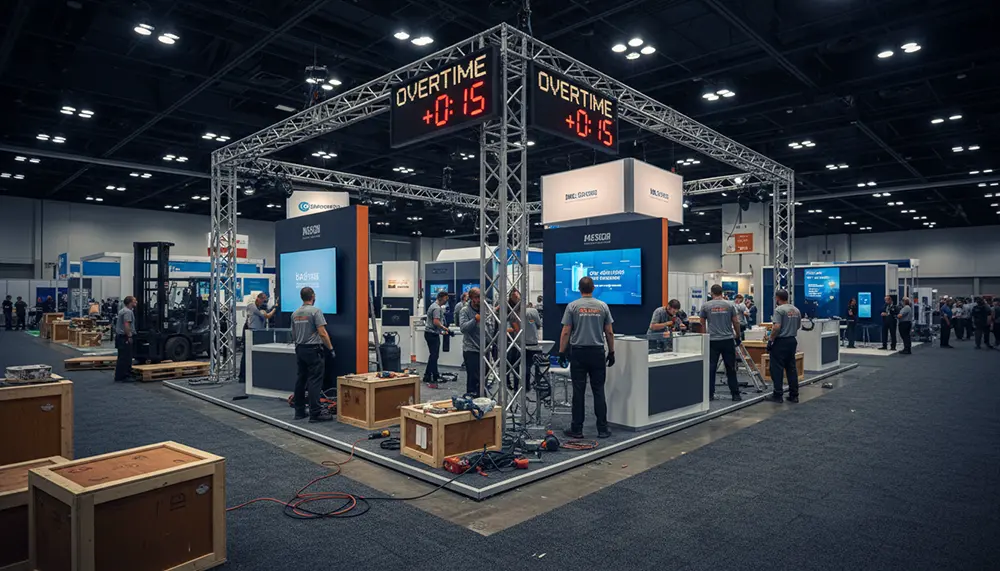

Ever get sticker shock from a final show invoice? You budgeted perfectly. Then the bill arrives with overtime charges that make your head spin.
We see it happen all the time. Let's break down why overtime happens and how to protect your budget.
How Overtime Sneaks Into Your Budget
Overtime rarely happens on purpose. It creeps in through small delays that snowball into big problems.
Common overtime triggers:
- Late freight arrivals at the dock
- Missing or mislabeled crates
- Incorrect rental parts delivered
- Crews unfamiliar with venue rules
- Poor pre-show preparation
- Last-minute design changes
The worst part? Once you hit 4:30 PM on a weekday, every minute costs you time and a half.
The Real Math Behind Labor Costs
Union rules vary by city, especially in places like Las Vegas and Orlando, but the multipliers stay consistent. Here's what you're actually paying:
Quick Napkin Math Example
Let's say you hire a 4-person crew at $50/hour (straight time):
Original budget: 20 hours × 4 people × $50 = $4,000
What actually happens:
- Truck arrives 3 hours late (now it's 5:00 PM)
- Build takes 8 overtime hours: 8 × 4 × $75 = $2,400
- Spills into Sunday for 4 hours: 4 × 4 × $100 = $1,600
New total: $8,000 (double your budget!)
Hidden Costs Beyond the Invoice
The financial hit is just the start. Consider these ripple effects:
- Team burnout happens fast. Your PMs lose sleep managing crisis calls. Staff morale drops from constant fire-fighting. Eventually, your best people quit from the stress.
- Client relationships take a hit too. Missed booth openings damage trust immediately. Budget overruns create awkward conversations nobody wants to have. Next year's contract goes to your competitor.
- Opportunity costs pile up quietly. You spend time fixing problems instead of winning new business. Resources get tied up in damage control. Happy clients stop sending referrals your way.
Smart Prevention Strategies
You can avoid the overtime trap with better planning. Here's what works:
Before the Show
- Lock in delivery windows early. Confirm dock times 48 hours before arrival. Build in buffer time for delays. Get backup contact numbers for emergencies.
- Prep everything offsite with a partner who handles full-service builds. Label crates clearly with booth numbers. Pre-assemble what you can in advance. Create detailed setup guides your crew can actually follow.
- Know the venue rules. Research union requirements for each city. Understand meal penalties and how they trigger. Learn about early-bird rates that save money.
During the Show Floor Setup
- Track progress hourly. Set milestone checkpoints throughout the day. Address delays immediately before they snowball. Always have a Plan B ready to go.
- Communicate constantly. Get photo updates every 2 hours. Confirm next-day start times before crews leave. Document any venue issues for your records.
What to Look for in a Labor Partner
Finding the right partner makes all the difference. Here's your checklist:
Must-haves:
- Local venue expertise (they know every dock and deadline)
- Transparent pricing structure
- Real-time communication systems
- Strong union relationships
- Backup crew availability
Red flags to avoid:
- Vague quotes without breakdown
- No local warehouse or staging area
- Poor communication during setup
- Constant upselling or surprise fees
How We Handle Labor at CREW XP
We've been doing this for years in Las Vegas and Orlando. We know these venues inside and out.
Our approach is simple:
- We prep everything in our 60,000 sq ft warehouse first
- We schedule smart to avoid overtime windows
- We communicate progress every step of the way
- We protect your budget like it's our own
Ready to keep your next project on time and on budget? Submit your details and we’ll take it from there.
Got questions for our team? Give us a call or fill out the form below and our team will be in touch as soon as possible.